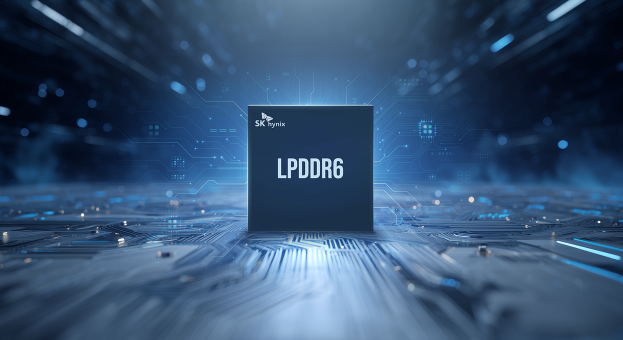
SK hynix unveils world’s first 1c-based LPDDR6
chip
By Jie Ye-eun, The Korea Herald - SK hynix said
Tuesday it has developed a next-generation 16-gigabit LPDDR6 DRAM built on its
10-nanometer-class sixth-generation 1c process, designed to support on-device
artificial intelligence in mobile devices.
LPDDR, or low-power double data rate memory, is
widely used in smartphones and tablets because it operates at a lower voltage
to reduce power consumption.
The company recently completed what it said was
the world’s first certification for a 1c-based LPDDR6 product after unveiling
the chip at CES 2026 in Las Vegas in January.
“We will complete preparations for mass
production in the first half of the year and begin supplying the product in the
second half,” an SK hynix official said. “This will help build a
general-purpose memory lineup optimized for AI implementation.”
The chip is expected to be used primarily in
smartphones and tablets equipped with on-device AI, which processes AI
functions directly on the device instead of relying on external servers.
On-device AI enables faster responses and more
personalized services as devices process data locally.
According to SK hynix, the new chip improves
both processing speed and power efficiency compared with its LPDDR5X
predecessor.
The LPDDR6 increases data throughput by
expanding memory bandwidth, delivering about 33 percent higher data processing
performance than the previous generation. Its operating speed reaches at least
10.7 gigabits per second, exceeding the maximum performance of LPDDR5X.
The chip also adopts a sub-channel architecture
and dynamic voltage and frequency scaling (DVFS) to optimize performance and
energy efficiency.
The sub-channel design activates only the data
paths needed for specific tasks, while DVFS automatically adjusts voltage and
frequency depending on operating conditions.
Together, these technologies reduce power
consumption by more than 20 percent compared with the previous generation.
In high-performance situations such as gaming,
DVFS raises operating levels to maximize bandwidth. During normal use, the
system lowers frequency and voltage to conserve power.
“Consumers are expected to experience not only
longer battery life but also smoother multitasking,” the official said.
The development comes as SK Group strengthens
its artificial intelligence semiconductor strategy.
At the Trans-Pacific Dialogue 2026 in February,
Chey Tae-won stressed the importance of memory innovation as AI demand
accelerates.
“AI is basically gobbling up electricity,” he
said, referring to the rising energy demand driven by expanding AI
infrastructure.
Industry observers say power-efficient memory
will become increasingly critical as AI workloads spread across mobile and edge
devices.
Source: https://www.koreaherald.com/article/10691015